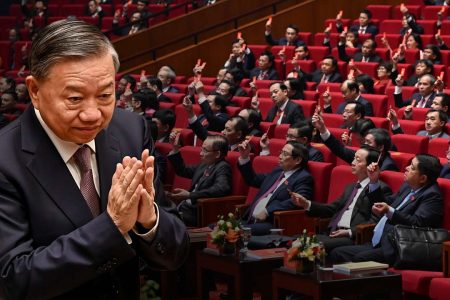
On August 25, 2016, in Hanoi, General Secretary and President To Lam called for measures to address violations and negative practices in education, and to resolutely combat the obsession with academic achievements, as well as cheating in studies and exams that takes many forms.
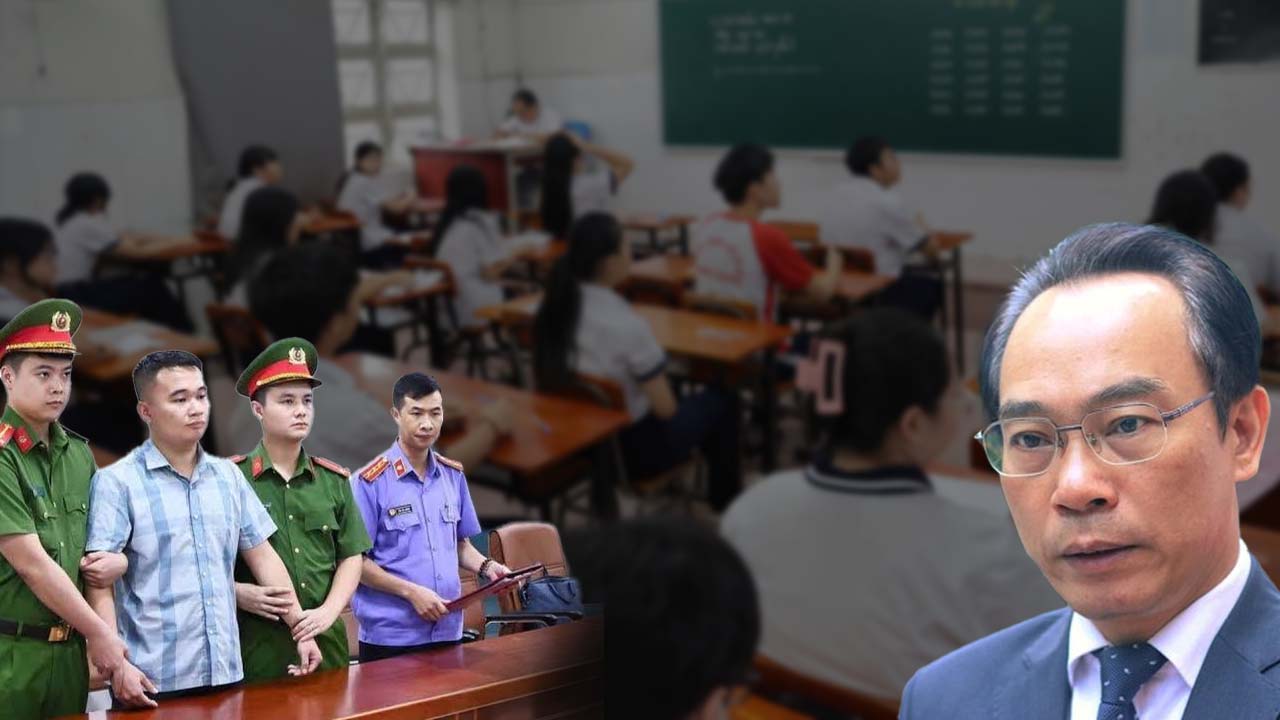
According to observers, the issue of grade fraud at Tuyên Quang Specialized School during the recent High School Graduation Exam is a stark reflection of the inequality deeply entrenched in the current education system.
The privileges enjoyed by powerful officials and wealthy businesspeople regarding their children have turned the school environment into a manipulated playground.
The reality over the past many years has shown that within these specialized high schools—which are supposed to be hubs for elite young talent—there are no shortage of irrational and bitter hidden corners.
The terrifying pressure to achieve high scores weighs heavily on teachers, compounded by the discrimination based on social status, influence, and wealth among parents, which is clearly evident in specialized classes.
The sight of wealthy individuals—who hold both substantial wealth and complex connections with local officials—readily grilling and threatening teachers over their children’s grades is merely the tip of the iceberg.
In this unequal “clash,” teachers are always in a vulnerable position. They must face a formidable local power that even the school administration fears.
Notably, the unreasonable disparity between students with truly outstanding abilities and those suspected of “somehow managing to squeeze their way into the specialized school”—a reference to the children of VIPs—has pushed teachers into a dead end. At the same time, this creates a school environment rife with absurdities.
According to well-informed sources, cheating does not begin with the high school graduation exam, as many people assume. Rather, it is a systematic chain of manipulation that extends all the way back to the 10th-grade entrance exams, featuring grade sheets “embellished” on command and spots in specialized schools allocated through intervention from higher-ups.
Children born into powerful families are “admitted before even taking the exam”—from the moment their parents use money and political influence to seize opportunities meant for others.
This injustice has “crushed” truly talented students, forcing them to face unequal competition against a network of wealthy and powerful parents.
Faced with an unusually high range of scores on exam subjects in Tuyên Quang, the solution proposed by authorities—having students retake the exams in a rush—was viewed as a deliberate move to legitimize the misconduct.
Organizing a rushed retest is akin to stamping a seal of legitimacy on a chain of negative practices that have existed systematically from the past to the present.
While intended to erase traces of fraud in the exam administration process, this approach completely overlooks the entire audit process regarding grade manipulation, academic record alterations, or admissions interference by influential parents.
This manipulation pushes poor students—and those with genuine ability but whose families lack the “means”—into a situation of utter despair.
When the nation’s elite educational resources are overwhelmed by special interest groups, opportunities for social advancement based on individual merit are severely curtailed.
This is precisely why, since 2007, the Organization for Economic Cooperation and Development (OECD) has warned that the “specialized schools and selective classes” model in Vietnam is deepening social inequality.
An educational system that allows privilege to trample on transparency in this way will never be able to cultivate true talent for the nation’s future.
Trà My – Thoibao.de