According to observers, the purchase of more than 100 tunnel boring machines (TBMs) for five urban rail lines totaling over 250 kilometers—with a projected total investment of up to 900,000 tỷ VND—demonstrates Hanoi’s massive infrastructure ambitions.
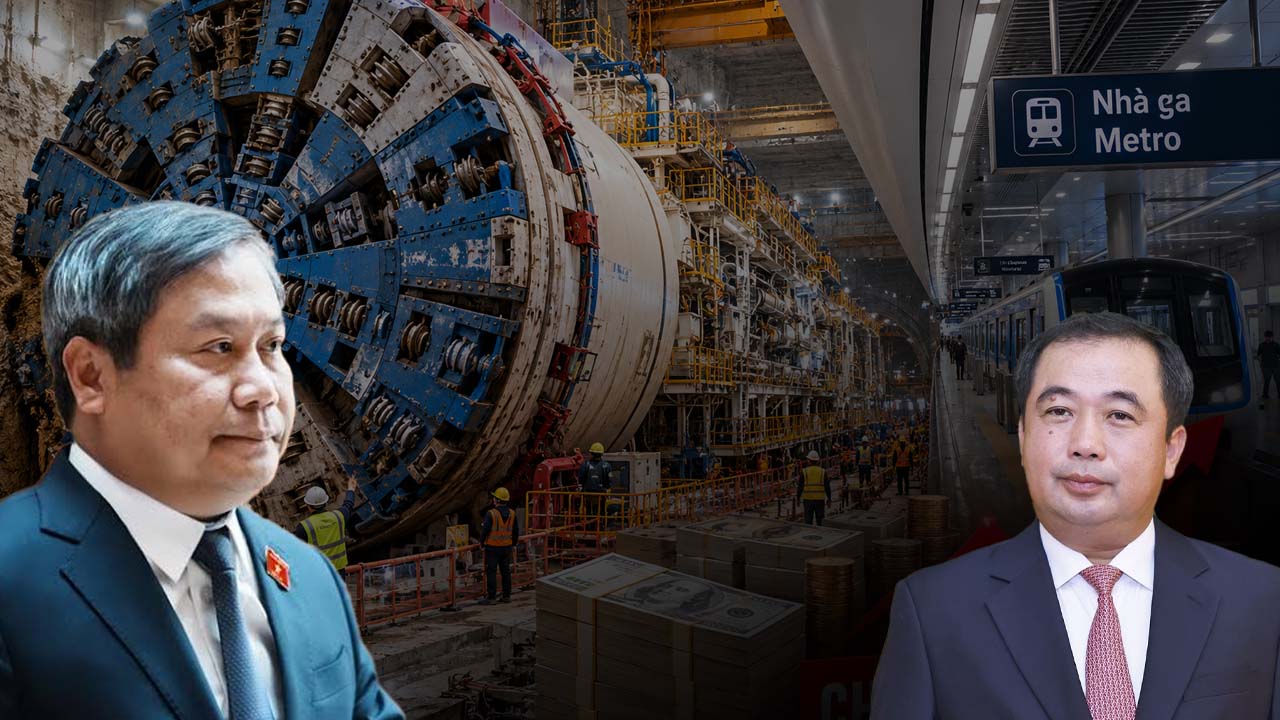
However, once the Vietnamese government’s current short-term stimulus cycle ends, if it cannot attract other sources of private capital to make up the shortfall, the numerous unfinished public investment megaprojects will face the risk of funding shortages and become a major debt burden on the budget during operation and maintenance.
This raises the question: Once completed, who will operate the metro system well enough to prevent it from rapidly deteriorating and pushing the state budget into a prolonged cycle of subsidies?
The lessons from the Cat Linh–Ha Dong railway project remain a valid warning. Vietnam may purchase the best tunnel-boring machines, hire world-class international chief engineers, and mobilize hundreds of trillions of dong in loans.
But there is one thing Vietnam absolutely cannot import off-the-shelf: the organizational structure and substantive management capabilities of the operational apparatus.
Accordingly, completing a major investment project is entirely different from having an organization with sufficient discipline to operate it safely and efficiently over a period of 30 to 50 years.
A modern metro system requires meticulous maintenance down to the smallest detail; technical incidents must be reported honestly rather than concealed to protect performance records.
Still, according to management experts, the biggest bottleneck for state-owned enterprises today lies in the lack of professional organization.
In particular, an underground metro system is extremely vulnerable to management flaws. The quality of the system is not merely measured on opening day but is tested every day throughout its operational lifespan.
Although Hanoi Railway Company Limited has recorded positive results with over 20.6 million passenger trips in 2025, its current capacity cannot support a network dozens of times larger.
Challenges in training high-quality personnel for train overhauls, or difficulties in immediately procuring specialized maintenance equipment, will soon become apparent. As minor delays accumulate, the risk of incidents will skyrocket, leading to emergency repair costs spiraling out of control.
The financial sustainability of the metro system cannot rely solely on ticket revenue or budget subsidies. The Transit-Oriented Development (TOD) model is expected to generate revenue from commerce and real estate in the areas surrounding stations.
However, TOD is not a money-printing machine if the managing entity lacks competence in market-based business operations. If the operating apparatus is accustomed only to budget allocations and passively waiting for subsidies, the effort to transform the transportation network into a commercial ecosystem will fail.
Conversely, if private entities are granted authority without transparent oversight mechanisms, the land value appreciation generated by public investment will flow entirely into the pockets of special interest groups, while the state budget continues to bear the full burden of risky operational costs.
A dangerous financial spiral can easily begin with poor governance, following this cycle: poor operations lead to rising costs; insufficient revenue forces the budget to cover the shortfall; and as budgetary pressure mounts, maintenance is cut, causing national assets to deteriorate more rapidly.
To avoid this disaster, the solution is not privatization at any cost, but rather the establishment of a transparent, fair, and accountable oversight mechanism.
If an honest and professional governance structure cannot be established from the outset, Hanoi’s investment of hundreds of thousands of billion dong into the ground will only inflate the debt trap for future generations.
Trà My – Thoibao.de
=======
Hanoi Builds 5 Metro Lines: How to Operate Them Without Becoming a Burden on the Budget?
“… With an ambitious 900,000 tỷ đồng budget for 5 metro lines, Hanoi faces the risk of heavy losses if the system lacks professional management, discipline, and transparency.”
#Vietnam #ChinhTruongVN #Thoibao